Horse weathervanes have long been one of the most recognizable and meaningful rooftop accents in American architecture. Whether you’re searching for a classic horse weathervane, an antique horse weathervane look, or copper weathervanes for sale that will last for decades, these designs combine practical wind direction with deep ties to equestrian heritage.
From working horse farms to show barns and private residences, the horse weathervane remains a symbol of strength, movement, and the close relationship between people and horses. Today’s copper horse weathervane designs continue that tradition while offering improved durability, precision balance, and mounting systems suited for modern roofs and cupolas.
Horse Weathervanes and Their Place in American History
Horse motifs have appeared on weathervanes in the United States since the 18th century. Early horse weathervanes were often handcrafted by blacksmiths and placed on barns, stables, and carriage houses. They frequently represented the type of horse most valued by the owner, such as a racing thoroughbred, a powerful draft horse, or a skilled jumper.
Because horses played a central role in farming, transportation, and sport, the horse weathervane became both a practical tool and a visible statement of livelihood and pride. This history is what continues to make antique horse weathervane designs so sought after today.
Modern reproductions capture the same silhouette and motion while improving weather resistance and balance accuracy.
Copper Horse Weathervanes vs Aluminum Options
When comparing copper horse weathervanes to aluminum designs, material choice matters both aesthetically and structurally.
Copper weathervanes are popular because copper naturally resists corrosion and develops a protective patina over time. A polished copper horse weathervane will gradually age into rich brown tones and eventually a soft blue verde finish, especially in humid or coastal climates. This makes copper an excellent choice for homeowners seeking a long-term, low-maintenance installation with visual character.
Aluminum horse weathervanes, often finished in black, offer a lighter-weight option with a traditional silhouette. Aluminum does not patina like copper but holds its finish well and is suitable for smaller structures where weight is a concern.
Examples include:


Selecting the Right Horse Weathervane Design
Horse weathervanes come in a range of poses, each reflecting a different aspect of equestrian culture.
A galloping or running horse weathervane emphasizes speed and freedom, making it a popular choice for racehorse owners and open pasture barns. Jumping horse rider designs reflect precision, training, and competitive riding disciplines, while cottage-size horse weathervanes are scaled specifically for smaller sheds, garages, and garden structures.
Notable design options include:
- Jumping horse rider weathervane

- Horse weathervane cottage size

- Smithsonian running horse weathervane

- Patchen horse weathervane
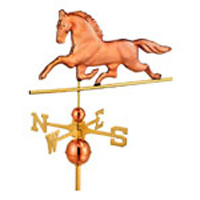
Each style is carefully made to stay balanced and move freely, so it responds smoothly as the wind changes.
Proper Sizing and Mounting Considerations
Choosing the correct size is just as important as selecting the right design. Larger weathervanes are best suited for barns, cupolas, and multi-story buildings where they can be seen from a distance. Smaller or cottage-size models work well on sheds, gazebos, and detached garages.
Modern horse weather vanes are typically mounted using stainless steel rods, brass directionals, and roof or cupola mounts designed to prevent leaks and ensure accurate rotation. Proper installation ensures both longevity and reliable performance.
Why Horse Weathervanes Remain Popular Today
Beyond their visual appeal, these weathervanes continue to resonate because of what they represent. Horses remain central to American culture through racing, agriculture, recreation, and sport. Displaying a horse weathervane is often a personal expression of that connection, whether tied to professional equestrian work or a lifelong appreciation for horses.
They also make meaningful gifts for horse owners, breeders, trainers, and stable managers, especially when chosen to reflect a specific riding discipline or horse breed.
Frequently Asked Questions About Horse Weathervanes
Horse weathervanes commonly symbolize strength, freedom, movement, and dedication to the equestrian lifestyle.
Copper requires minimal maintenance. Many owners allow natural patina to develop, while polished finishes can be periodically cleaned and re-sealed with lacquer spray if a brighter appearance is preferred.
Yes. Copper resists rust and corrosion, making it suitable for coastal, rural, snowy, and high-humidity environments.
Yes. Cottage-size horse weathervanes are designed specifically for sheds, garages, and smaller rooflines.
True antiques are best preserved as decorative pieces. For accurate wind direction and long-term outdoor use, modern reproductions are recommended.